
How do you live?
Eurovision, awkward grief and intentionality

I watched Eurovision Song Contest for the first time. My partner Mel produces pop music (Sirens of Lesbos foreverrrrr) and started watching the competition seriously a few years ago partly for a feel of what gets the people going, partly because he’s a sucker for tradition. He watched it as a child, his parents still tune in religiously, he’s already looking forward to watching it with his child. Last year’s winner was Swiss, which meant that this year’s show was hosted in Switzerland, in Basel. We watched the whole thing, which ended at like 1am and this felt as reckless as binge drinking, given the ever-present pressure to ‘sleep when the baby sleeps.’1 The next day I felt properly hungover, both from minimal sleep and from the audiovisual bonanza itself.
I found the whole affair to be pretty cringe to be honest. Audience voting via text message is outdated, especially given how TikTok fame so hugely skews the outcome.2 But I also hate the kind of pop music that dominates, those over the top vocals with that ugly generic-EDM sound ugh. I did however love doing deep analytics on each performance with my anthropologist bestie, extra fun because he’s gay AKA loves campy singing. It felt like both a buffet and a barometer of contemporary mass-appeal European culture which for the most part feels extremely trashy to me. I guess there’s a fine line between camp and kak; I was equally fascinated and horrified. The largesse of it all, the grossness of it all. There were also some odd moments of total cultural dissonance, like when the whole stadium was singing “Waterloo” by ABBA, Mel joined in and was surprised that I don’t know the words and I was like, uh I’m Black lol. The redeeming highlight for me was the Italian (competitor/delegate? I’m not sure what to call them). Lucio Corsi, wow what quality. Singing, piano, guitar, mouth organ?! Out of this world.
Afterwards, I was hyping him to a friend, who didn’t watch the show but did join the protest against Israel’s participation outside the stadium. Eurovision novice that I am, I was surprised by the petition that went around before the competition calling for Israel to be excluded cos I’m just like, genocide aside why are they part of a European competition in the first place?! And same for Australia??? Turns out eligibility is based on broadcasting not geography. Anyway, she was like, “Of course the Italian is good, they actually compete for the best performer to represent the country, instead of playing victim on a literal international stage.”
*
Segue to sadness: my heart sinks whenever I see that flying white dove emoji on Instagram. I immediately put my phone away before being overwhelmed by collective grief which is exactly what happened when artist Githan Coopoo passed away. I didn’t know them, but many of my friends did so it seemed that sadness kept wafting my way with every story and post. I regularly use an app blocker to stop myself from binging on Instagram, and I’ve learnt that it’s especially helpful for these situations. But this meant that I missed the doves announcing that curator Koyo Kouoh had passed away too. I was sitting in the garden with my child, her first picnic, very much offline when a friend called to tell me. Amid the shock, we both laughed at how much we hate that fucking dove.
I don’t really know how to behave in public (i.e. online) when famous people die. Like, being bummed about what it means for society as a whole is a very legit reason to grieve but I often feel awkward about doing this online via commemorative posts. I despise questioning whether my public feelings are performative. This is not in any way to suggest that others are performing grief, just that I personally struggle with showing big feelings online. I was grateful for that phone call with a loved one while outside looking at baby toes; it felt safer than consuming the ocean of grief for someone as big as Madame Koyo, as many called her. Then I saw a post by Mpho Matsipa-Okoye which began “I never met Koyo Kouoh in person” but was so sincere in her sadness of “this profound loss, for everyone” that I felt like a window was opened in my mind and I could think properly about my own complicated sadness.
I met Koyo a few times, in the context of Basel and Bern museums and on each interaction, I left feeling horrible. I don’t think her iciness was personal; I recognise that being a powerful person likely necessitated a high degree of coolness as armour against every Tom, Dick and Harry wanting a piece of her. She didn’t owe me any warmth, but its a weird one admiring someone who has treated you coldly. It’s even weirder now because speaking badly about dead people is such a taboo,3 but I’d feel dishonest if I only sang her praises. That said, When We See Us: A Century of Black Figuration in Painting was such a game-changing exhibition for me. It gave me so much joy and so much confidence to try new things, like hosting a public reading group that in turn introduced me to so many incredible people. I feel the big hole she has left in the world most keenly when thinking about how her work touched my own.
I’m thinking especially about how every aspect of that exhibition coming to Basel from Cape Town was overseen by her almost militant intentionality, and how that deliberateness came through in her whole presence. Her outfits, her institutional prowess, her word choice in person and on paper. Even that dragon lady aura, unpleasant though it could be, was impressive in its intentionality. Becoming a parent has forced me to become more efficient in how I use my time since it’s so limited now (not to mention sleep deprived lol) but I’m also thinking about how to be more deliberate too.
Grateful for those who moved with such studied, wilful purpose that they move me to think about my own.
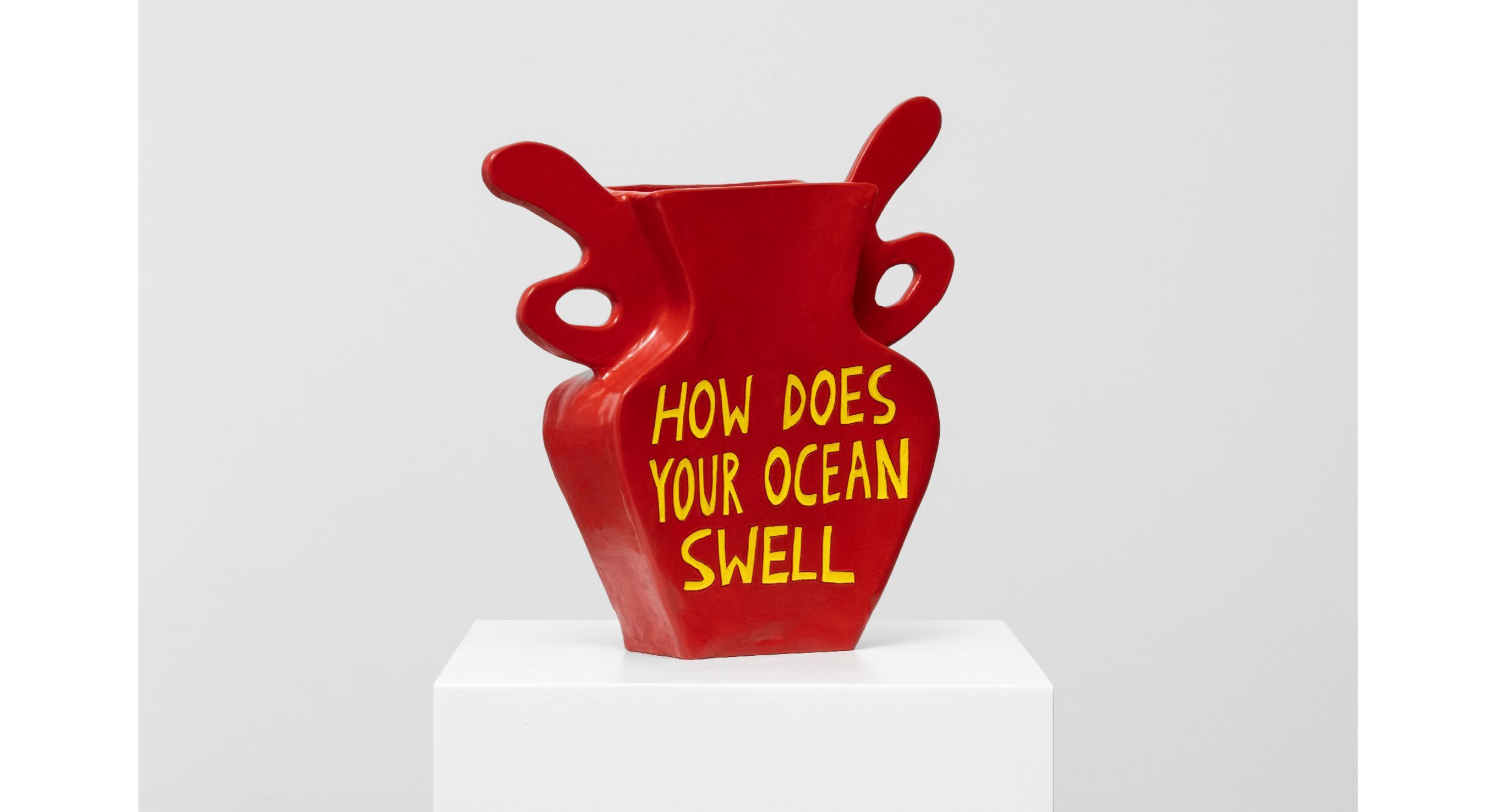
Githan Coopoo, How do you live?, 2024
Of all the mindless unsolicited baby advice, this is my worst. Like DUH I want to sleep when the baby sleeps but also, when am I supposed to eat, shower, use the toilet, bake, read, write, handle admin, get groceries, be a functioning member of society!
On the ridiculousness of viral singers, see: Tommy Cash
One of my favourite writers Bongani Kona, edited this book Our Ghosts Were Once People: Stories On Death and Dying and it has helped to nuance how I think about and discuss dead people.